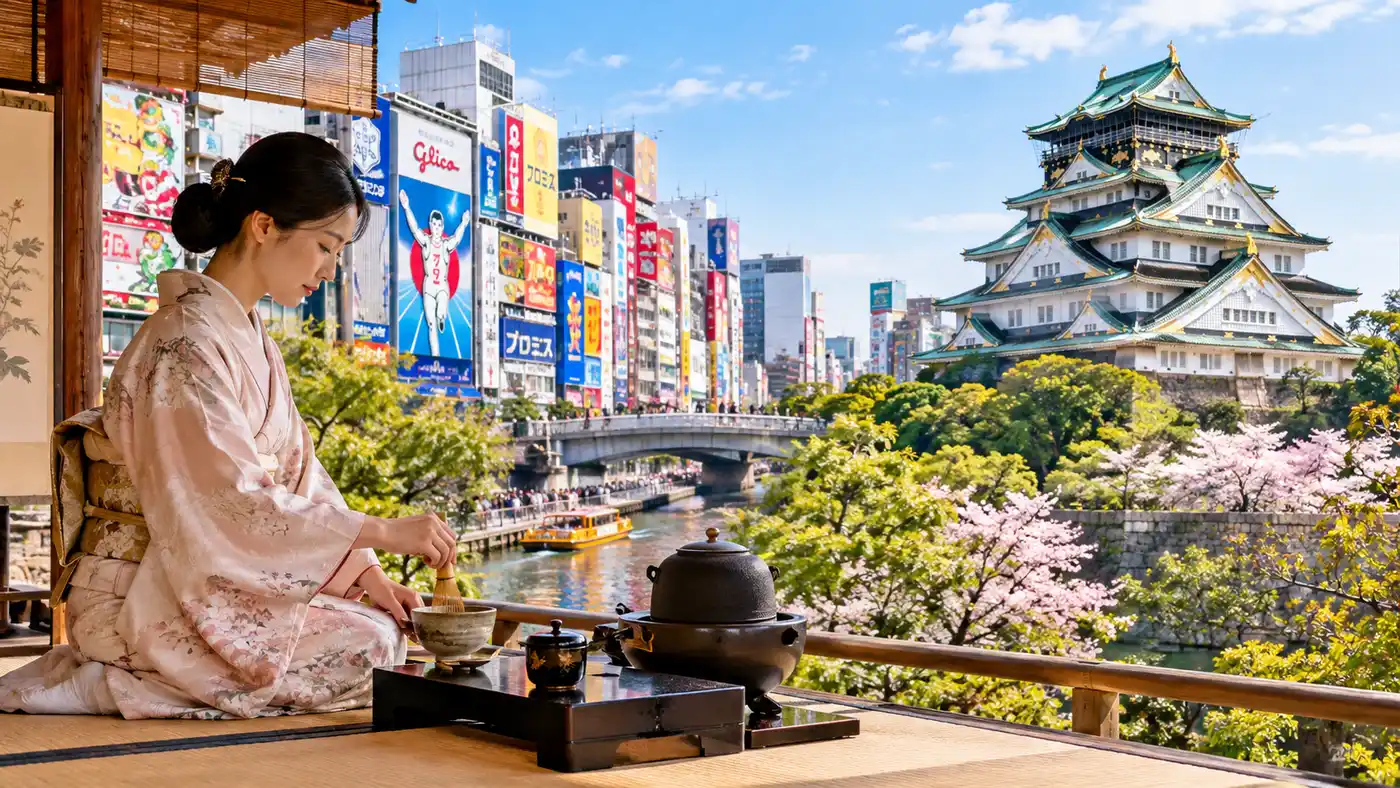
Best Tea Ceremony Locations in Osaka: Dotonbori and Osaka Castle
Compare the best tea ceremony spots in Osaka between bustling Dotonbori and scenic Osaka Castle. Discover local tips, …
Continue Reading →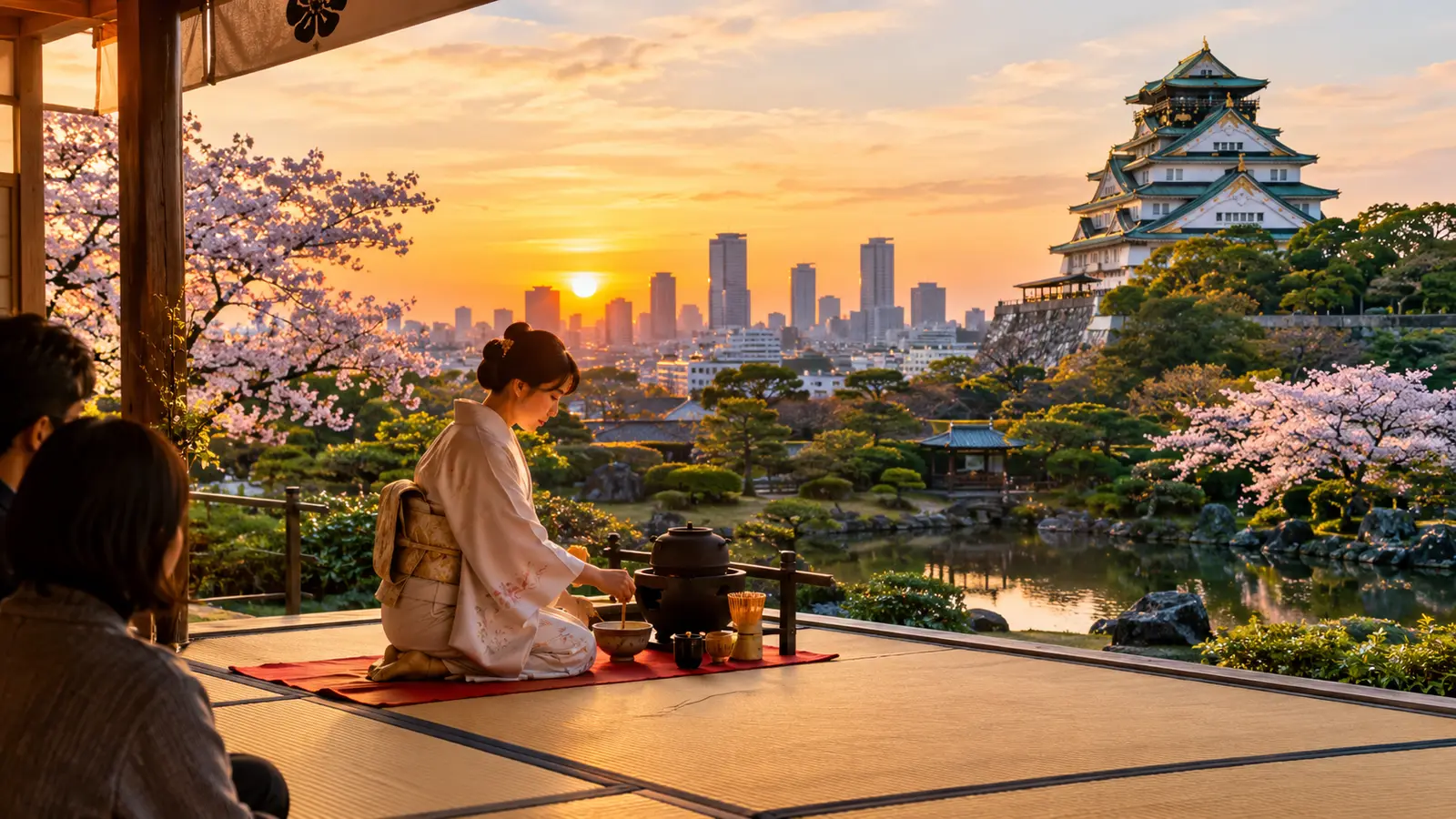
Step off the noisy streets into a quiet tatami room for an authentic Japanese tea ceremony Osaka masters lead with warmth and centuries of ritual.
Discover what makes tea ceremony osaka unforgettable.
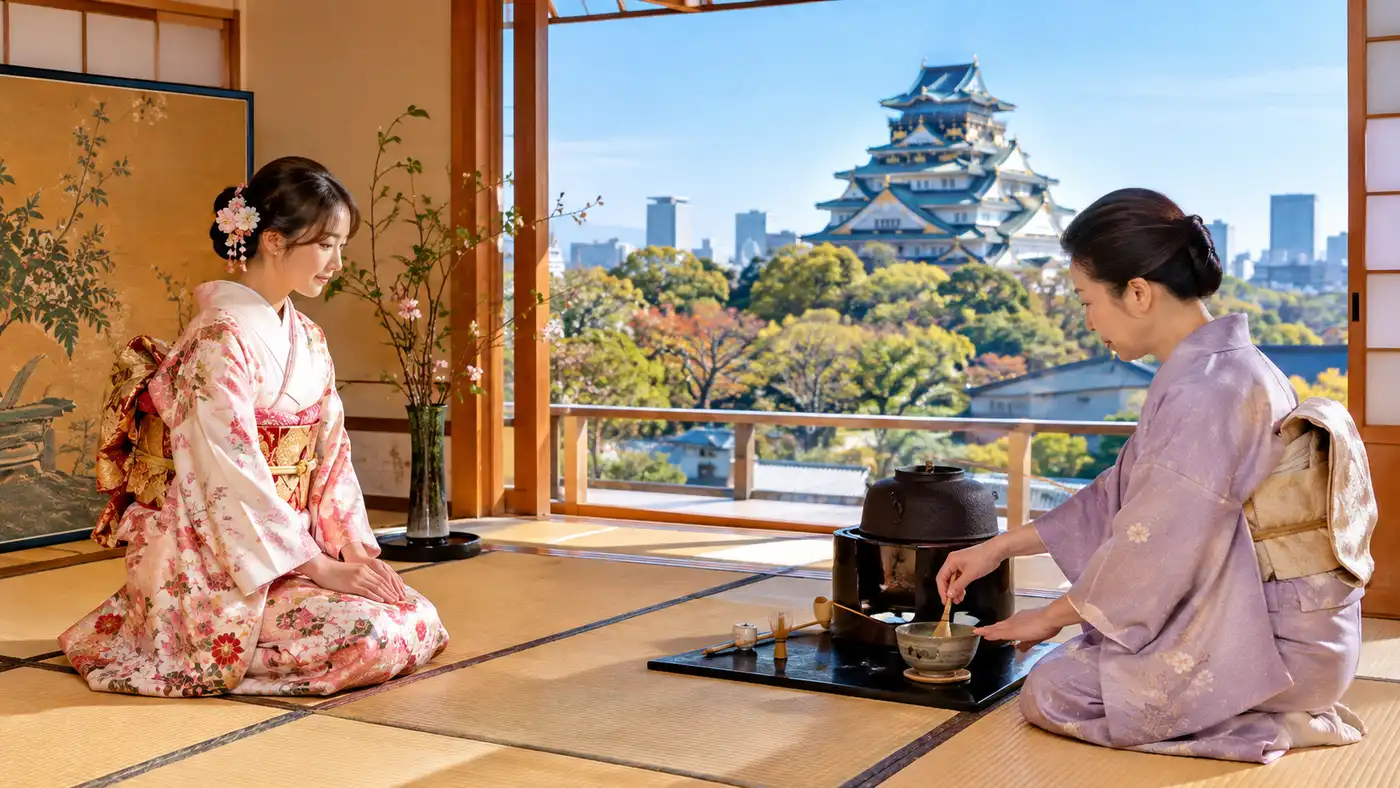
Learn the wrist-driven motion required to build a dense, velvety microfoam with a hand-carved bamboo chasen. Your instructor explains water temperature and leaf grades before you brew your own bowl.
Learn more →
Tuck into preserved timber buildings tucked along the side streets of western Osaka. These spaces feature sunken hearths, hanging flower vases, and sliding paper shoji that filter afternoon glare into soft ambient light.
Learn more →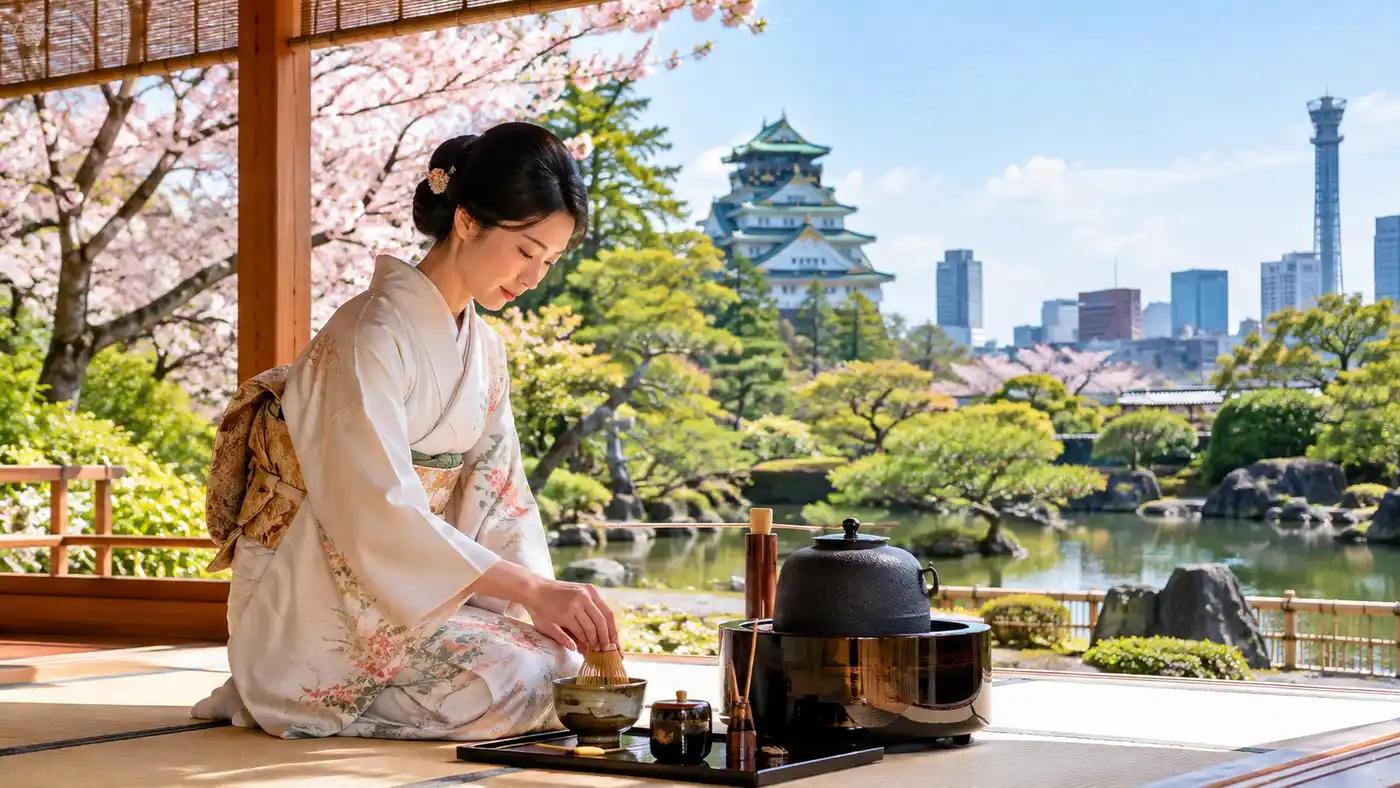
Navigate bowing angles, sweet consumption timing, and tatami boundaries with confidence. Our step-by-step pointers help you relax rather than fret over making social blunders during the ritual.
Learn more →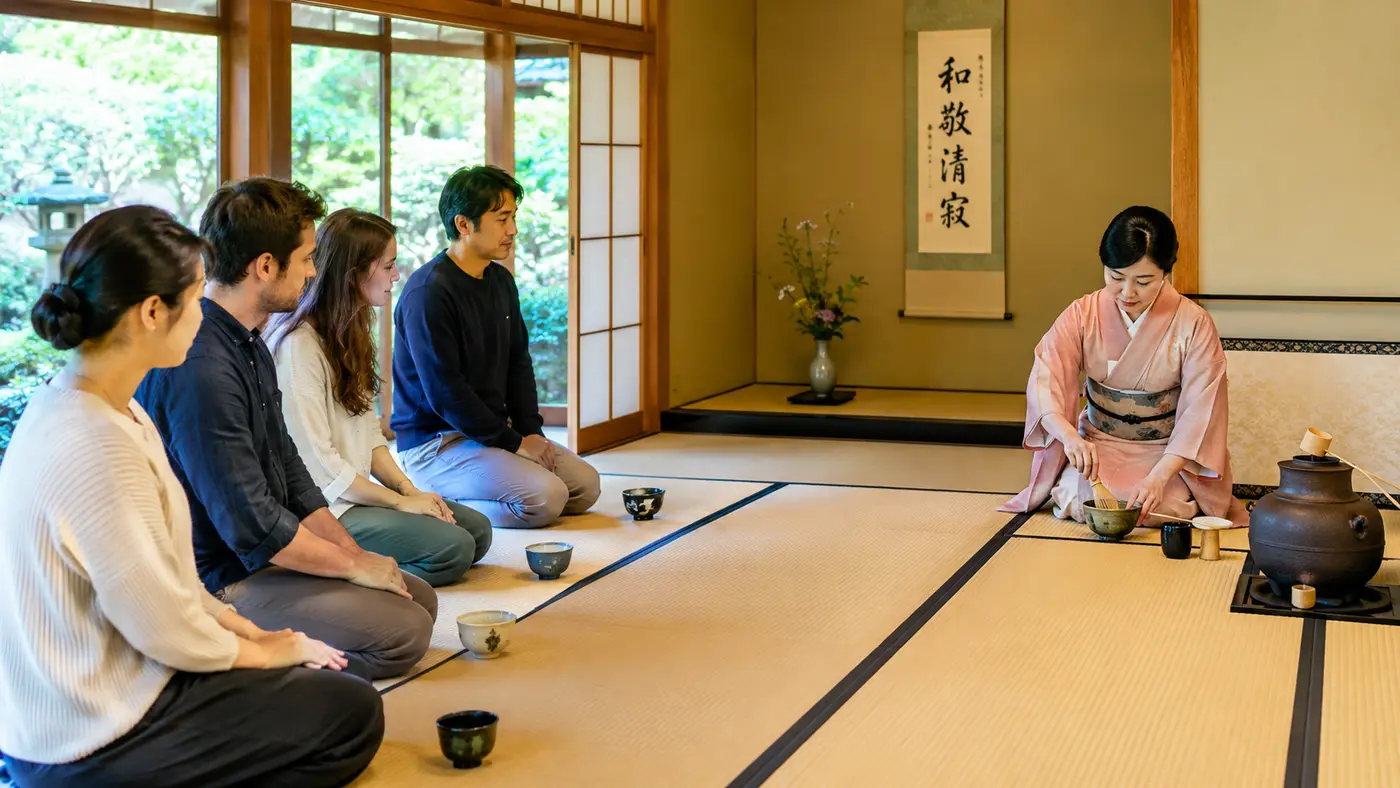
Pair your tea ritual with full traditional attire selected to match the current month. Stylists help you choose seasonal obi sashes and secure the collar properly before you step onto the tatami.
Learn more →What to expect from arrival to departure.
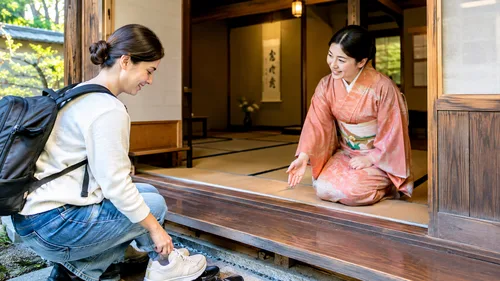
Remove street shoes in the genkan foyer and slip into clean white socks before stepping onto tatami mats.
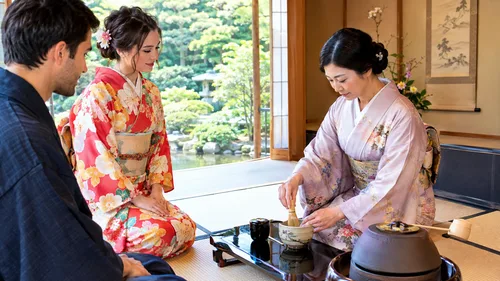
Choose an authentic seasonal kimono and let experienced dressers adjust your nagajuban undergarments and obi sash.
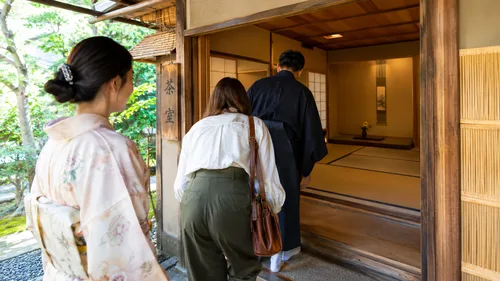
Crawl gently through the low nijiriguchi entrance, an architectural touch meant to establish absolute equality among guests.
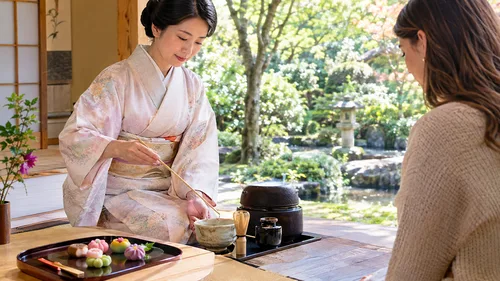
Eat a seasonal sweet confection first, which lines the palate with sugar to balance the astringent matcha to come.
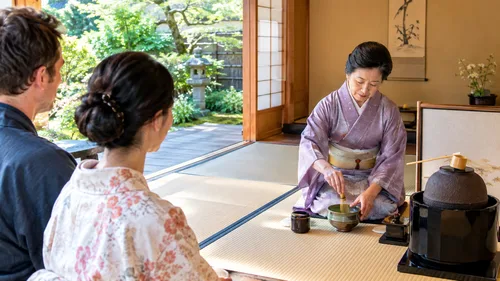
Watch the silent, rhythmic preparation of the green tea, from boiling kettle water to the whisking of the jade froth.
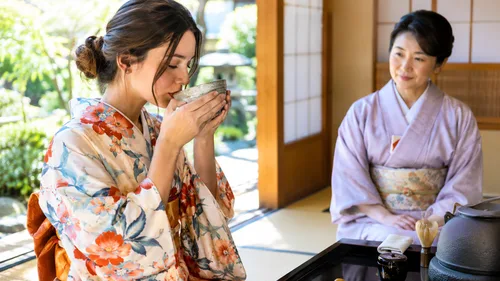
Turn the chawan bowl twice clockwise, drink in three sips, admire the artisan pottery, and converse with the host.
Osaka built Japan's trading wealth, but it also nurtured Sen no Rikyu, the Sakai merchant who revolutionized the way Japan drinks powdered green tea. Booking a tea ceremony in Osaka reveals a contemplative counterweight to the city's neon-lit food markets. You step off the pavement, slide back a cedar lattice door, and enter a quiet room carpeted in fresh rush mats where every gesture follows a choreography refined across four centuries.
An authentic Osaka tea ceremony experience stays true to the spirit of chado, the way of tea. Whether you drop by a neighborhood tea house ceremony Osaka locals recommend or attend the popular kimono tea ceremony Maikoya Osaka hosts near Shinsaibashi, the pacing is patient. Masters whisk vibrant green broth from single-origin leaves in front of you, balancing its earthy bite with seasonal wagashi sweets molded to mirror morning dew or maple leaves.
Unlike the formal aristocratic rituals preserved in former imperial courts, an Osaka traditional tea ceremony retains the approachable spirit of the merchant quarters. Hosts welcome your questions about iron kettles, scroll calligraphy, and unglazed ceramics while gently explaining how to turn your bowl so your lips never touch the painted front design.
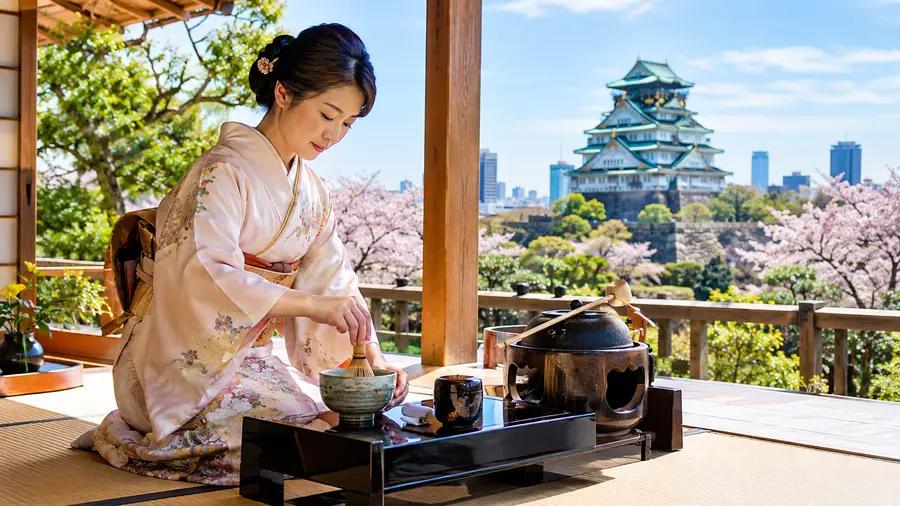
The master took time to explain the seasonal motif of our wagashi sweet, which was shaped like a tiny persimmon. Sitting on tatami was easy thanks to the small backrest stool they provided.
Dressing in the dark navy men's kimono took barely ten minutes. Whisking the green tea to a thick foam was trickier than it looked, but our instructor had endless patience.
A lovely 65-minute reset away from Dotonbori crowds. Finding the back-alley entrance in Nishi Ward was a slight puzzle, but the staff came outside to wave us in.
We did our tea session at 11 AM before walking over to Orange Street. The tea had an intense grassy smell and paired wonderfully with the red bean cake.
Compare options and book directly below.
Includes one fresh seasonal wagashi sweet, host demonstration, and hands-on preparation of your own bowl of matcha.
Full silk kimono rental with professional dressing, hair styling accessories, photo time in the garden, and full tea ritual.
Exclusive tearoom use for 90 minutes with an Urasenke-certified instructor covering utensil care, history, and advanced whisking.
Everything you need to know before visiting tea ceremony osaka.
Hours: 10:00 - 18:00 daily
| Standard Matcha Ritual (Advance booking recommended) | ¥3,850 |
| Kimono & Tea Experience (Book 3 days ahead) | ¥7,200 |
| Private Masterclass (Minimum 2 people) | ¥14,500 |
📍 2F Dotonbori Building, 1-chome Higashi 5-26, Dotonbori, Chuo Ward, Osaka 542-0077, Japan
See it before you go.
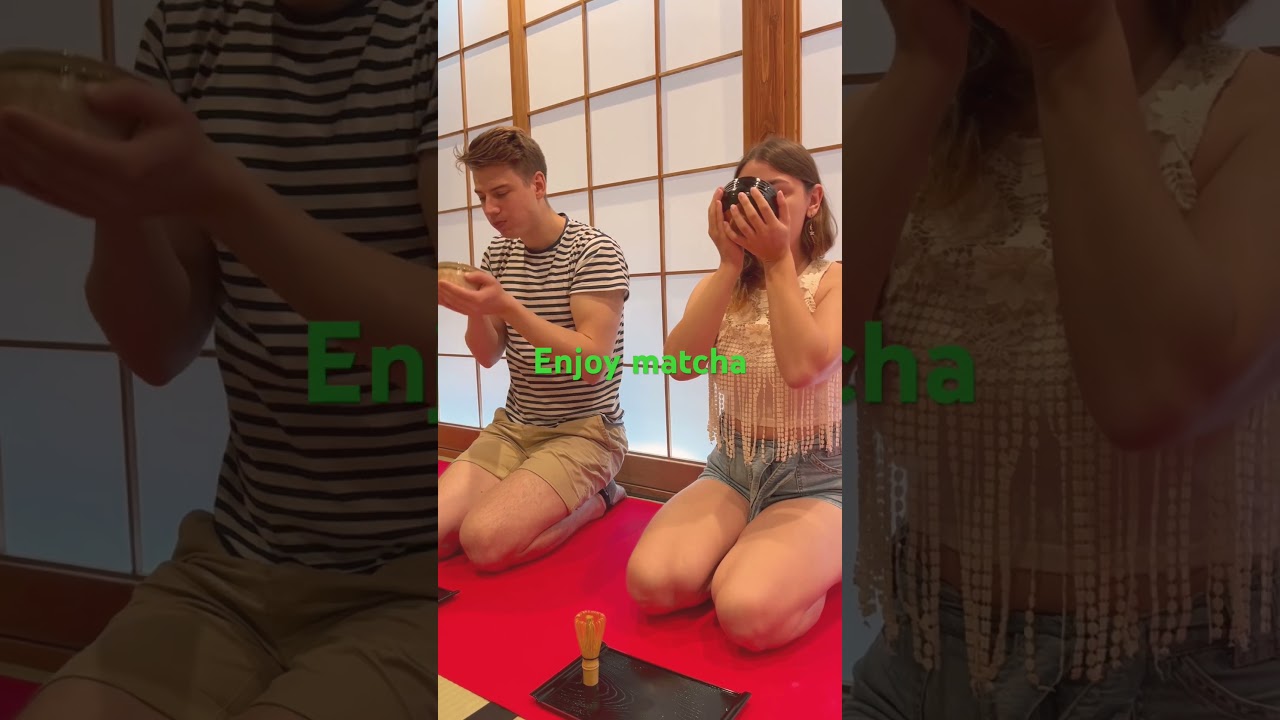
Worth combining with your tea ceremony osaka visit.
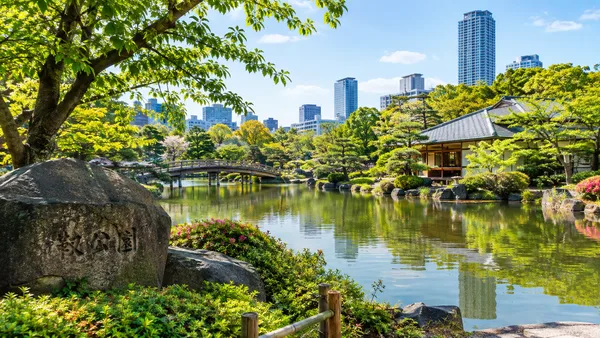
Quiet green space with rose gardens and independent specialty coffee stands.
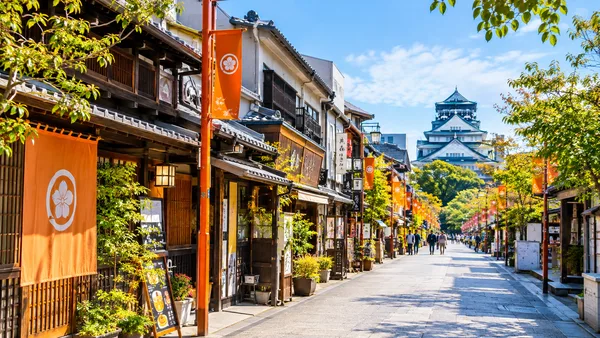
Tree-lined strip of local craft boutiques, furniture studios, and vintage clothing shops.
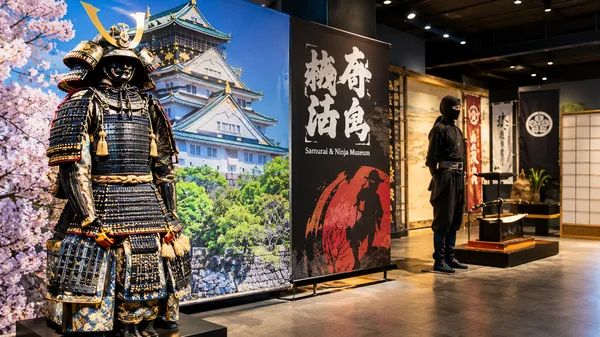
Compact cultural museum displaying Edo-period armor and antique swords.
Tea Ceremony Osaka welcomes all visitors with accessibility features and family-friendly amenities.
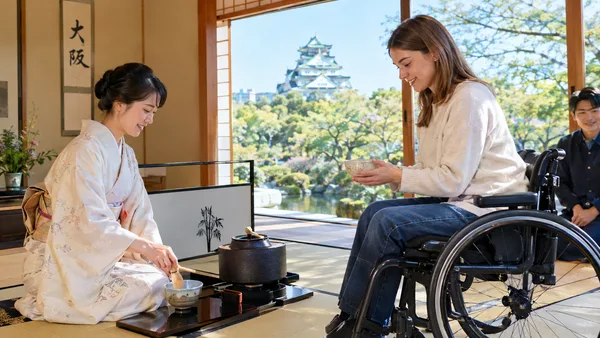
Not wheelchair accessible. The tea room is located on the 2nd floor of a building with no elevator or escalator, accessible only by stairs.
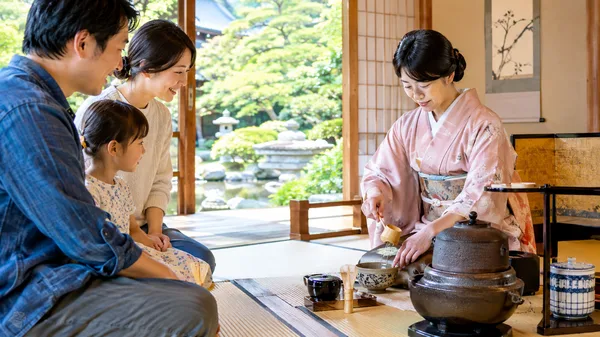
Children aged 5–11 can participate in the Shared Plan at a reduced rate; caffeine-free matcha alternatives are provided for kids. Families with children under 5 years old must book a Private Plan, as children under 5 are not permitted in shared sessions. Baby strollers and carriages are not allowed inside.
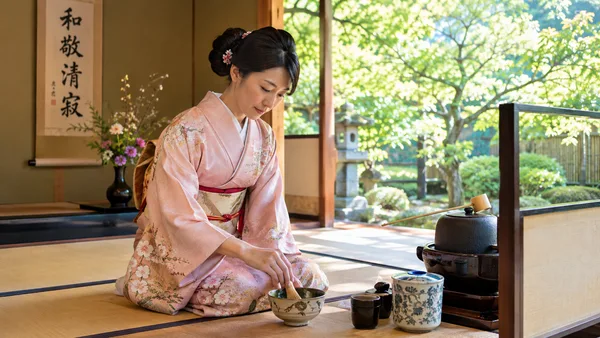
Sessions are run in fluent English or Japanese, complete with printed illustrated guides covering historical background.
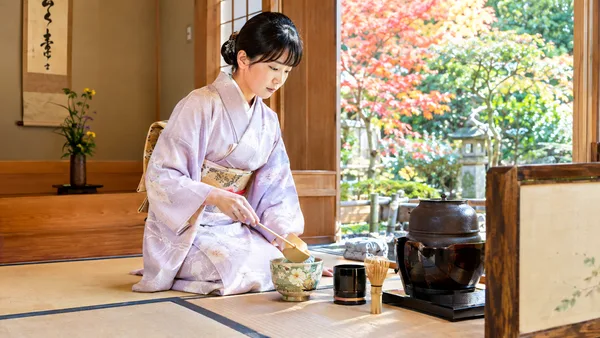
The experience takes place in a traditional tatami room; low stools/chairs are provided for guests who cannot sit comfortably on the floor. Access to the venue requires climbing stairs. Located approximately 3 minutes on foot from Nipponbashi Station (Exit 6) and 5 minutes from Namba Station (Exit 15).
Dive deeper into tea ceremony osaka.
Compare the best tea ceremony spots in Osaka between bustling Dotonbori and scenic Osaka Castle. Discover local tips, …
Continue Reading →
Discover authentic Japanese tea ceremony classes. Learn what happens, class costs, tatami etiquette, and how to whisk …
Continue Reading →
Book a kimono tea ceremony in Osaka. Real advice on silk dress fittings, matcha etiquette, package costs, and …
Continue Reading →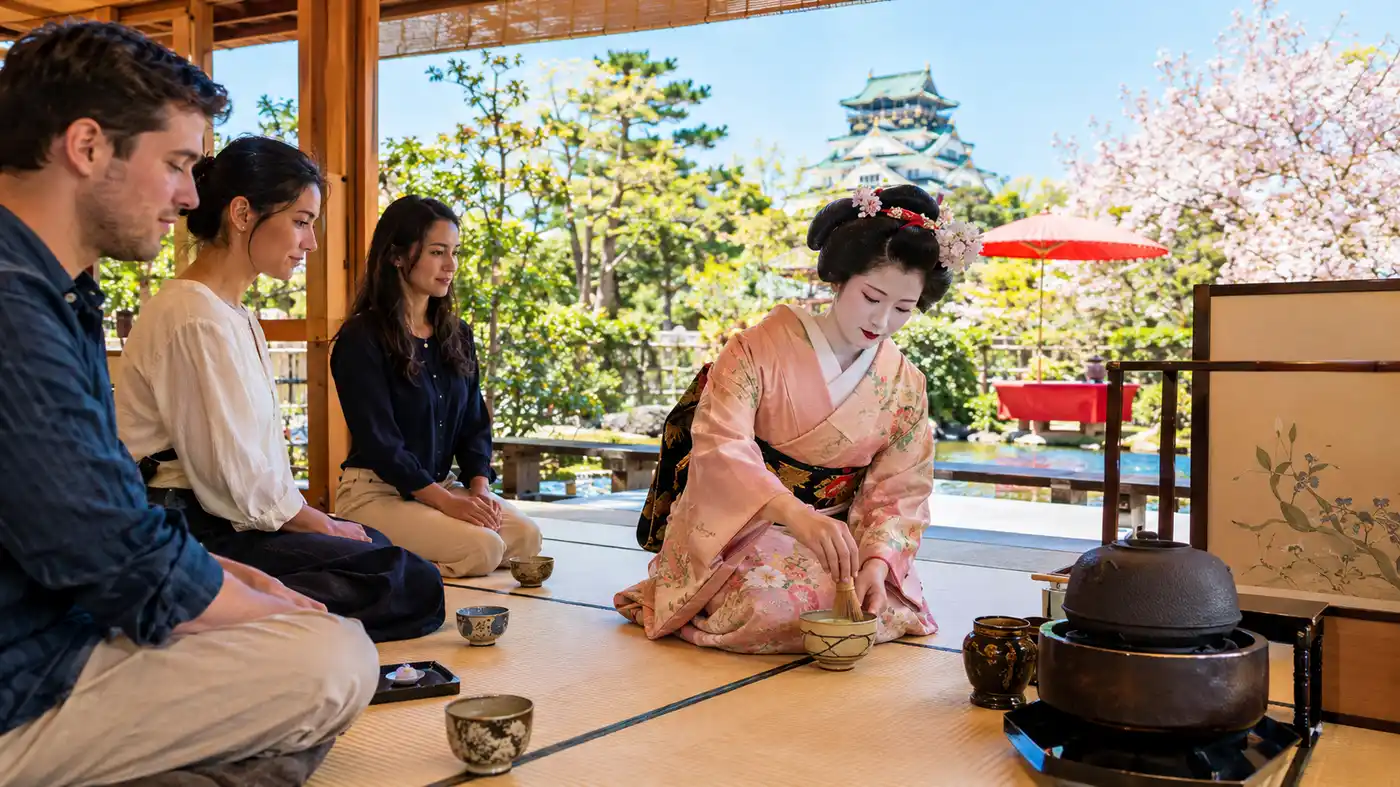
Book a private tea ceremony in Osaka. Compare geiko performances, casual tea bars, and mochi pairings with pricing, …
Continue Reading →
Deciding between a tea ceremony in Osaka, Kyoto, or Tokyo? Here is how the atmosphere, cost, and formality compare so …
Continue Reading →Common questions about tea ceremony osaka.
Kyoto locations sit in older wooden merchant machiya houses with heavier tourist traffic, while the Osaka branch in Nishi Ward offers smaller groups, a relaxed atmosphere, and teachers who lean into casual conversation alongside classic ritual.
Most studios let you take photos during kimono dressing and after the formal preparation concludes. Hosts ask you to leave cameras aside while the tea master is actively cleaning utensils and boiling water so you stay present in the moment.
Nobody expects foreign guests to endure painful leg cramps. Instructors will show you how to sit cross-legged comfortably, and most venues have discreet low stools that keep your posture straight without straining your knees.
Bare feet transfer skin oils onto untreated rush tatami mats, causing permanent dark spots. Clean socks keep the flooring pristine and show respect for the host's tearoom.
Standard sessions often fill 5 to 7 days ahead during peak spring blossom and autumn foliage weeks. Kimono dressing options require booking at least 3 days early so dressers can prepare garments suited to your height.
Traditional wagashi confections are naturally vegan, made from sweet azuki bean paste, rice flour, and agar. Gluten-free visitors can eat nearly all standard sweets, though notify your venue in advance if you have severe soy or food dye sensitivities.
None at all. Hosts walk you through every step, showing you when to bow, which hand holds the bowl, and how to express thanks using simple phrases.
Small group sizes keep spaces limited to 8 guests per seating. Check availability for your travel dates and enjoy a peaceful cultural break.