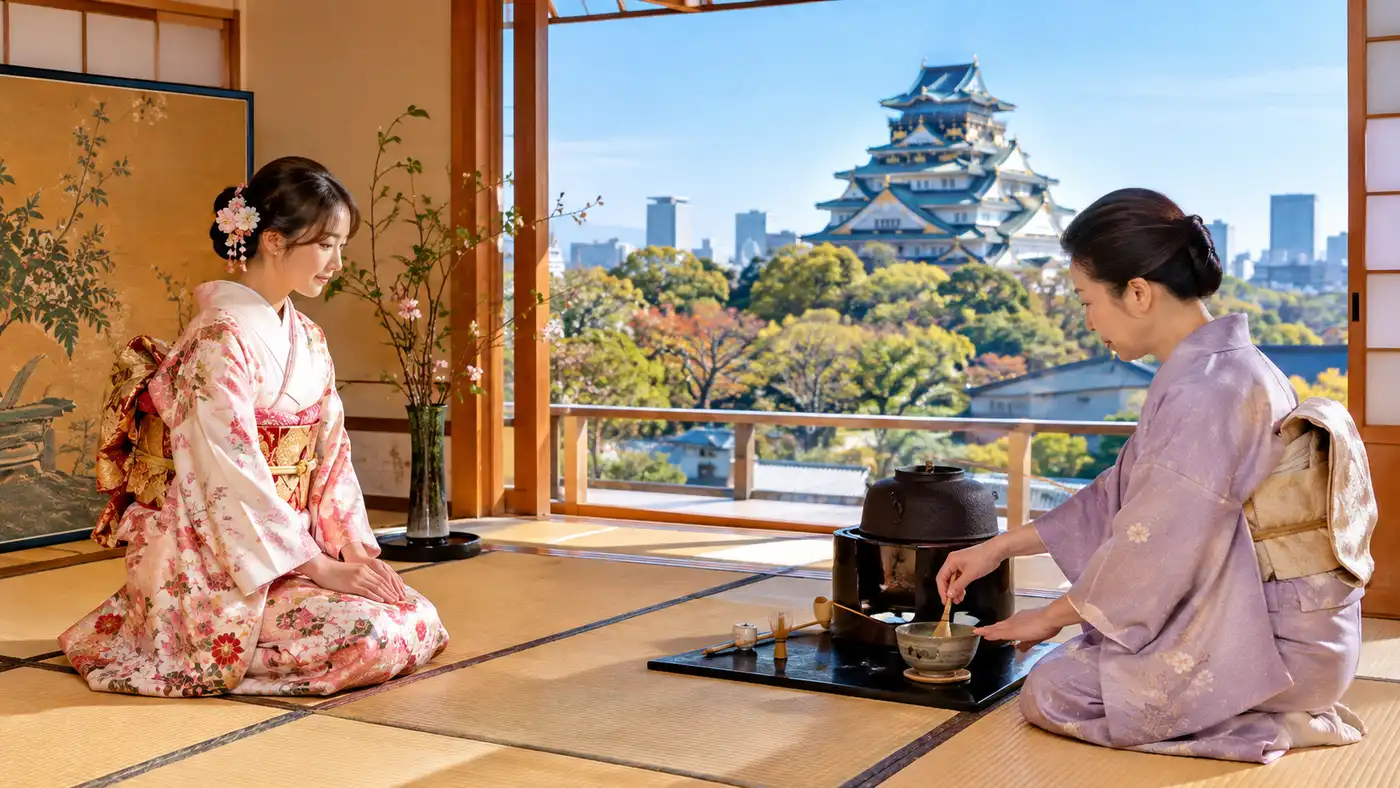
Kimono Tea Ceremony in Osaka: Traditional Dress Experience
The morning I booked a kimono tea ceremony osaka session, it was raining hard over Namba, the kind of heavy sky that makes you want to hide in an arcade and eat fried dumplings until noon. Instead, twenty minutes later, an elderly dresser named Keiko was wrapping three yards of stiff woven silk around my ribs so tightly that my spine straightened whether I wanted it to or not. Osaka does this to people. Everyone expects the city to be all neon lights, cheap draft beer, and noisy canal walks, but tucked away on quiet second floors and side alleys, people have been whisking powdered green tea according to Sen no Rikyu's strict principles for over 400 years.
Wearing the traditional robe changes the entire ritual. Without the heavy layers of silk and the flat wooden sandals, the ritual can feel like an elaborate cooking demo with nice pottery. When your knees are locked against a rush tatami mat and the stiff collar keeps your chin lifted, the silence of the room makes sense. This guide breaks down what an osaka kimono tea ceremony feels like in reality, what you actually wear underneath the robes, what it costs, and how to avoid feeling like a prop in a tourist photo shoot.
Book your tea ceremony osaka experience:
What to Expect When Getting Dressed for a Tea Ceremony in a Kimono in Osaka
The dressing process takes roughly 20 minutes if your host has done it a thousand times, or closer to 35 minutes if you pick an elaborate pattern with formal sash folds. You step out of your street shoes at the threshold and put on white split-toe tabi socks. Then comes the hadajuban, a plain cotton slip meant to absorb sweat and keep oils away from the antique silk. If it is summer, you will be grateful for that thin cotton layer within four minutes.
Dressing an adult in a kimono is physical work. Keiko pulled cords, tucked flat padding around my lower spine to eliminate my waist curve, and hauled on the obi belt with three sharp tugs. Traditional Japanese styling favors a smooth, tubular shape. If you have hips or broad shoulders, the dresser simply adds folded hand towels beneath the cords until your torso looks like a wooden pillar. It feels restrictive at first, almost like wearing a soft medical cast, but after ten minutes your breathing settles into a steady, quiet rhythm.
Walking in traditional footwear requires immediate adjustment. Your knees must stay pressed together, your stride drops to half its normal distance, and the straw zori sandals make a rhythmic scraping sound against floorboards. If your phone slips out of your hand, you cannot bend at the waist without the collar digging into your throat. You have to drop down into a slow, vertical squat while gathering your long sleeve with one hand so it stays clear of the floor.
Pro tip: Wear a deep V-neck undershirt and smooth, low-rise undergarments. Crew neck collars peek through the crossover neckline of the kimono, which ruins your photos, and untying six ropes for a bathroom break takes at least 15 minutes.
The Ritual: An Osaka Tea Ceremony with Kimono Step-by-Step
Once you are dressed, you wait in a small entry alcove until the tea master opens the sliding paper door. In older, traditional tea houses, you crawl inside through a low square opening called a nijiriguchi. The door stands barely three feet high. It was designed during the Sengoku period to force samurai warriors to take off their swords and enter as equals, lowering their heads regardless of rank or wealth. Sliding through that opening while managing yards of ceremonial fabric requires concentration, but it marks an immediate line between the busy street outside and the quiet room.
The room is sparse. You will see a hanging scroll with brushed ink calligraphy chosen specifically for the current season, alongside a single fresh blossom arranged in an unglazed ceramic vase. Osaka tea masters usually speak with a warm, grounded energy that feels different from the formal stiffness you find in Kyoto. If you are debating between cities for your trip, our comparison of the tea ceremony in Osaka vs Kyoto vs Tokyo looks closely at how local cultural attitudes shape each session.
Before any tea touches your lips, the host serves a single sweet called a wagashi. Mine looked like an autumn persimmon, crafted by hand from sweetened white bean paste and sticky rice dough. You eat the whole confection with a tiny wooden skewer before taking a sip of the drink. The concentrated sugar coats the back of your tongue so that the thick, bitter foam of the matcha strikes your palate as rich and balanced rather than unpleasantly grassy.
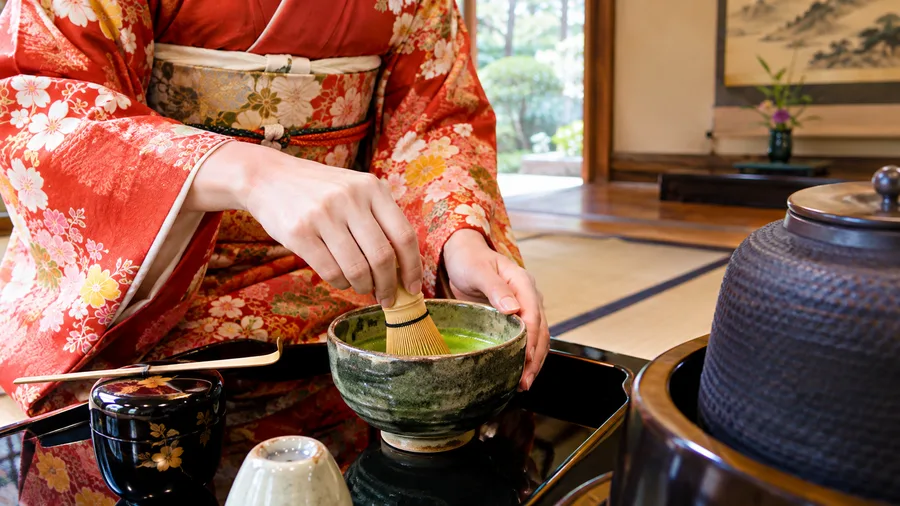
The preparation itself is hypnotic to watch. An iron kettle boils over glowing charcoal embers, filling the room with the dry scent of burning wood and steam. The host scoops powdered green leaves using a curved bamboo spoon, adds boiling water with a deep wooden ladle, and whips the mixture into a creamy emerald froth using a whisk carved from a single piece of bamboo. When the host hands you the bowl, you place it in your left palm, steady it with your right fingers, and rotate it clockwise twice to avoid drinking directly from the front art. You drink the entire portion in three slow sips, making a sharp slurping sound on the last draw to signal that you have finished.
Comparing Osaka Tea Ceremony Kimono Packages and Costs
Price differences usually reflect the quality of the textiles and the privacy of the room. Budget storefronts offer synthetic polyester yukata, which are single-layer summer robes meant for street festivals. They look vibrant on camera, but they do not drape like real silk, and tea masters consider them casual lounge clothing. A traditional osaka tea ceremony with costume involves multiple padded layers, woven brocade sashes, and formal guidance from an experienced host.
Small group experiences in a shared room generally run around 5,500 yen per person. If you want a private room with hair styling, real vintage silk, and an instructor who explains the philosophical roots of tea, expect to pay closer to 12,000 or 15,000 yen. The table below outlines what you get across typical price tiers in the city.
| Package Tier | Typical Cost (JPY) | Robe Material | Duration | Setting |
|---|---|---|---|---|
| Casual Yukata Workshop | 4,500 - 6,000 | Cotton or Polyester | 45 minutes | Shared group studio |
| Standard Silk Kimono | 7,500 - 10,500 | Lined Silk or Rayon Blend | 60 - 75 minutes | Small group tearoom |
| Private Heritage Session | 13,000 - 18,000 | Antique Silk & Brocade Obi | 90 minutes | Private traditional machiya |
Before you tap your credit card, read the fine print about inclusions. Most entry-level studios charge extra for small items that seem like basic necessities.
- What standard bookings include: seasonal sweets, freshly whisked bowl of ceremonial-grade matcha, dressing assistance, and basic footwear.
- Frequent upgrade charges: professional hair setting with ornamental pins (usually 2,000 to 3,000 yen), outdoor garden access passes, and larger foot sizes.
- Cancellation policies: traditional masters prepare perishable confections fresh that morning, so cancelling less than 24 hours out will almost certainly cost you the entire fee.
Book your tea ceremony osaka experience:
Best Spots for an Osaka Tea Ceremony with Kimono Experience
Where you book sets the mood of your entire afternoon. A studio inside a high-rise shopping arcade feels convenient, but hearing subway announcements through the drywall ruins the meditative feeling of the whisk hitting the ceramic. Neighborhoods like Chuo-ku, Tennoji, and the quiet lanes surrounding Osaka Castle give you old stone paths and garden greenery that fit the ritual far better.
If you want authentic backdrops for pictures, book somewhere near the castle moat or inside an older merchant neighborhood. We reviewed the city's standout tearooms in our guide to tea ceremony locations in Dotonbori and Osaka Castle, where you can see which spots feature authentic outdoor moss gardens versus simple interior mats.
Dotonbori works well if your travel schedule is tight. You can step out of a neon arcade, complete a tea ceremony with kimono osaka style in sixty minutes, and head straight back out for skewers of grilled beef. Just remember that central studios process high tourist volumes, so the dressing rooms can feel rushed during peak cherry blossom weeks in April and foliage season in November.
Note: Most operators strictly forbid you from wearing their authentic silk kimonos out onto wet city sidewalks; if outdoor street photos are your priority, confirm their walking boundaries beforehand.
Surviving the Mat: Practical Realities of Traditional Wear
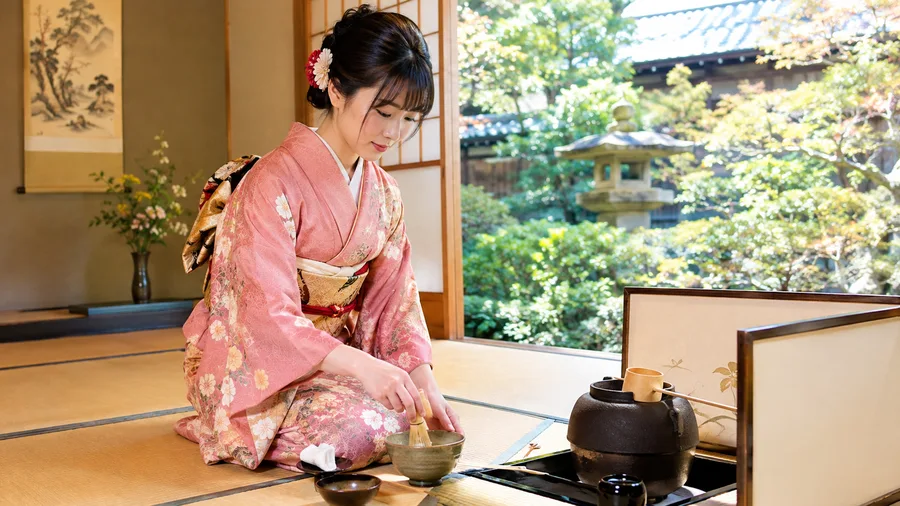
Sitting seiza, kneeling on your shins with your bottom resting on your heels, begins to hurt around the six-minute mark. Your feet go cold, followed by a pins-and-needles sensation that makes your ankles feel like frozen glass. The kimono acts like a mild back brace, which helps you sit tall, but it also traps your legs tightly against the tatami.
Hosts know this. They watch foreign guests shift and wince, and modern teachers will offer a small wooden stool called a seiza chair before your legs go completely numb. Accepting the stool is not an insult. In Osaka, practical comfort usually beats unnecessary suffering, and a good host prefers that you pay attention to the tea rather than fight through ankle cramps.
- Jewelry and accessories: leave metal bracelets, rings, and smartwatches in your locker because hard metals easily scratch priceless antique lacquer and ceramic bowls.
- Hygiene and tatami: clean tabi socks are mandatory; walking barefoot on woven rush mats is a serious cultural mistake throughout Japan.
- Photography rules: never snap photos while the master is actually whisking or pouring hot water; wait for the designated photo pauses at the end.
- Handling the bowl: always lift the tea bowl with both hands and never slide it across the tatami, as small grit can scratch the glaze.
Frequently Asked Questions about kimono tea ceremony osaka
Can men and children participate in a kimono tea ceremony in Osaka?
Yes. Shops carry men's kimonos, which feature simpler colors like navy, charcoal, or dark green, alongside wide belts tied lower on the hips. Children usually need to be at least six or seven years old to participate comfortably, mainly because the robes must fit their height without dragging along the floor.
How long does the entire experience take from start to finish?
Plan for about 90 minutes. That window gives you 20 minutes for selecting robes and dressing, 45 minutes for the actual tea ritual and drinking, and another 20 minutes for candid photos and changing back into your street clothes.
Do I need to speak Japanese to follow the ceremony?
Not at all. The majority of studios in central Osaka run sessions in clear English. Hosts use visual cues, slow hand movements, and quiet demonstrations, so following the correct etiquette is simple even if you have never seen a tea bowl before.
What should I wear underneath the kimono during colder months?
Tearooms can feel drafty in winter because sliding paper screens let cold air through. Wear thermal leggings and a wide scoop-neck heat-tech shirt under your clothes. Just ensure the collar of your undershirt plunges low enough in the front and back so it remains invisible beneath the kimono neckline.
Quick Reference
- Total time: 75 to 90 minutes
- Average cost: 5,000 to 14,000 JPY
- Footwear: Split-toe tabi socks provided
- Seating: Tatami mat kneeling with low stools available
- Booking window: 4 to 7 days ahead for weekends
Book your tea ceremony osaka experience:
The Bottom Line
An afternoon tea ceremony in a kimono in osaka is one of the few travel activities that forces you to slow down completely. In a city built around loud food markets, pinball parlors, and frantic train transfers, sitting motionless in three pounds of vintage silk while hot water drips into a clay bowl resets your mind. Pick a smaller studio with an authentic tea master, wear the right undergarments, and accept the wooden kneeling stool the moment your shins start complaining. You will walk away with exceptional photos, a sweet taste on your tongue, and a genuine appreciation for Japan's oldest hospitality art.
Read more about tea ceremony osaka.