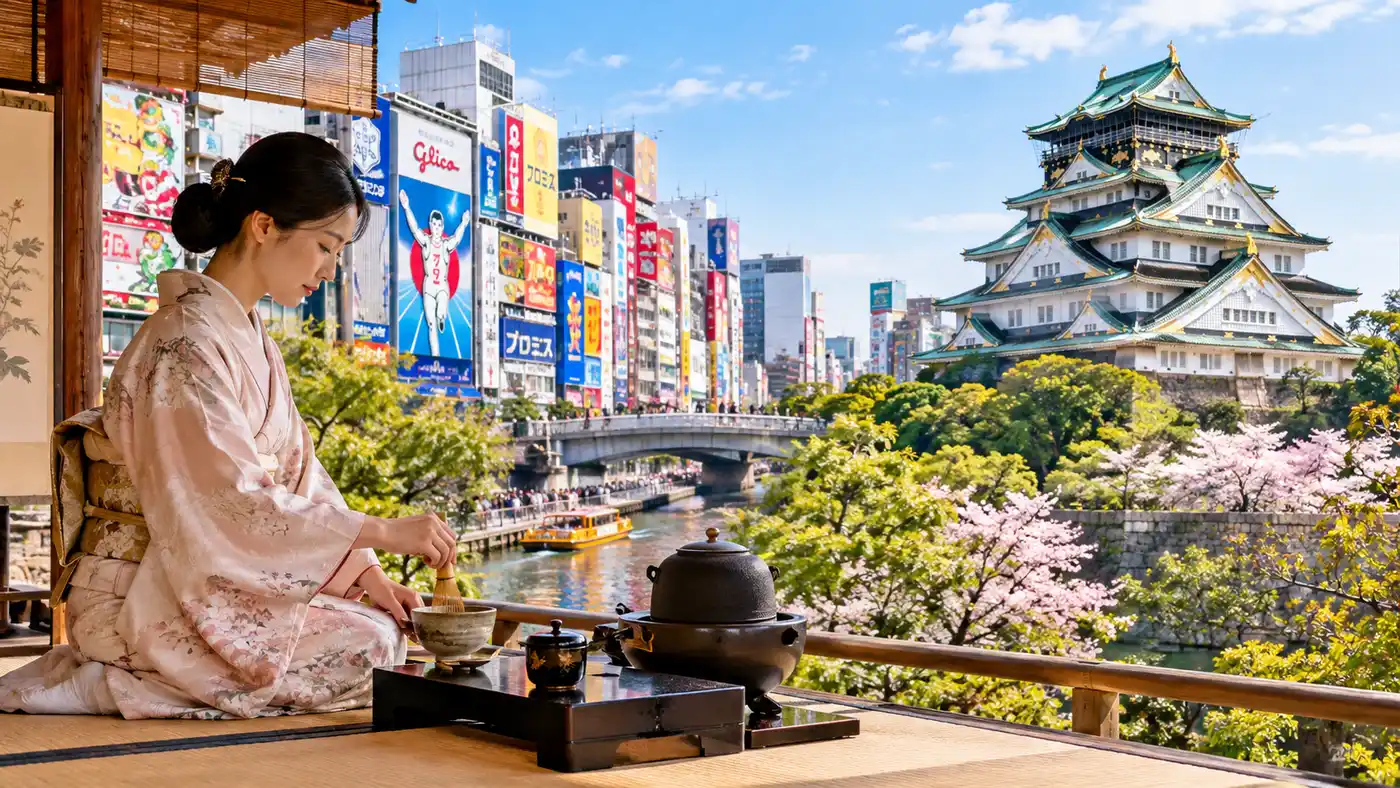
Best Tea Ceremony Locations in Osaka: Dotonbori and Osaka Castle
Dotonbori smells like scorched batter, sweet pork broth, and fryer oil at two in the afternoon. Giant motorized crabs wave plastic claws above your head, crowds push along the canal wall, and someone behind you is shouting about discounts on cosmetics. Then you turn down an alley barely wide enough for two people, slide open a slatted cedar door, and the noise cuts out completely. Finding a proper tea ceremony dotonbori osaka experience right in the middle of that neon storm is one of the best surprises the city offers. It feels like stepping into a cold plunge after an hour in a sauna.
Osaka does not handle traditional culture quite like Kyoto. Kyoto acts as if every street corner is sacred, but Osaka puts a 400-year-old ritual inside a three-story commercial building twenty yards from a pachinko parlor. Or, if you head east, Osaka stages that same tea bowl against the massive granite ramparts of Osaka Castle. Travelers planning their itineraries get stuck deciding between these two worlds. You can choose the dense, walkable chaos of Dotonbori or the breezy pines around the castle grounds. Both show off different sides of how this commercial town serves powdered green tea.
Book your tea ceremony osaka experience:
The Hidden World of Tea Ceremony Around Dotonbori and Namba
Most tourists treat Dotonbori as a place to eat octopus balls until they burst and take selfies with the Glico running man. Fair enough. Yet the narrow backstreets running south toward Sennichimae and east toward Nihonbashi hide dozens of small cultural studios. When you book a tea ceremony experience in osaka doutonbori, you are rarely visiting a centuries-old wooden villa. Instead, you ride an elevator up to the fourth floor of an unassuming 1980s concrete block, step out of your boots, and walk directly onto freshly laid rush tatami mats.
The contrast makes the tea taste sharper. Outside, trucks back up with beeping alarms, yet inside the room you hear water coming to a slow simmer in a cast-iron kettle called a kama. The tearooms in Namba and Dotonbori tend to be practical, friendly, and deeply aware that most visitors have never sat on their shins before. The masters here will not scold you for stretching your legs when your knees start screaming after six minutes. They understand hospitality as comfort rather than intimidation.
Pro tip: Book your Dotonbori tea slot for around 4:00 PM. It breaks up an afternoon of intense walking, gets your feet off the pavement right before the heavy evening crowds roll in, and resets your brain before dinner.
Several venues around Dotonbori also let you rent a silk garment before your host begins preparing the tea. If that appeals to you, taking time for a kimono tea ceremony in Osaka adds another layer to the afternoon, mostly because walking down those tiled corridors in tight wooden geta sandals forces you to slow down your stride before you even enter the tearoom.
- Location convenience: steps from Namba and Shinsaibashi subway stops, making it easy to stack with street food runs.
- Atmosphere: intimate, quiet apartments converted into minimalist teahouses tucked away from neon signs.
- Style of instruction: casual, conversational, and tailored for travelers who want to ask questions without feeling awkward.
- Time required: roughly 45 to 60 minutes door-to-door, which fits neatly into a packed city schedule.
Sipping Matcha Under the Stone Ramparts of Osaka Castle
Osaka Castle feels totally removed from the tight alleys of Dotonbori. The park covers over 250 acres, filled with flowering plum groves, black pine trees, and moat walls built from stones so heavy that samurai had to haul them on rollers from distant quarries. Getting to a tea ceremony osaka castle spot requires actual legwork. You walk along wide gravel paths, hear gravel crunching under hundreds of sneakers, and smell moss on damp fortress walls.
Tea has deep roots on this specific hill. Toyotomi Hideyoshi, the sixteenth-century warlord who unified Japan and built the original castle, was obsessed with the ritual. He famously constructed a portable room covered entirely in gold leaf - walls, ceiling, pillars, and even the tea whisk were gold. At the same time, he kept his tea master, the legendary Sen no Rikyu, close at hand. Rikyu preferred cracked clay bowls, rough wooden posts, and quiet humbleness. That tension between showy Osaka wealth and monastic simplicity still hangs in the air near the castle gardens.
Venues near the castle, particularly around the Nishinomaru Garden and the historical halls nearby, provide views of the main keep rising over cherry branches. Sitting in an authentic Japanese room with wide glass panels or open shoji screens while looking out at those grey stones makes you feel grounded in history. It feels classical in a way that downtown apartments cannot replicate.
Note: Walking from the nearest subway station (Osakajokoen or Tanimachi 4-chome) to the actual tea venues inside the park takes at least 15 to 20 minutes across open paths. If it rains, bring a sturdy umbrella, because there is little cover between the station and the gardens.
The pace out here is slower. You see elderly locals feeding pigeons, groups of school kids on field trips, and gardeners trimming pine needles by hand with small shears. Drinking bitter green broth while watching the wind stir the moat water gives you a pause that Dotonbori simply cannot deliver.
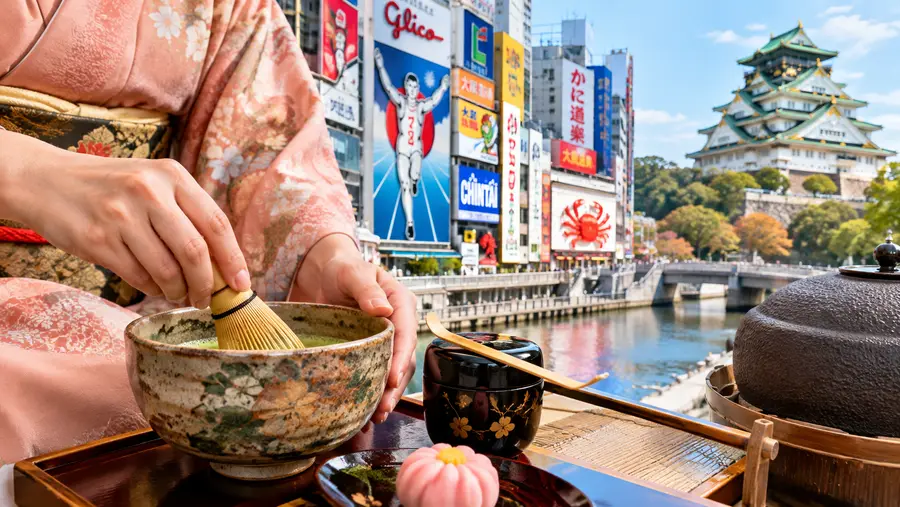
Dotonbori vs. Osaka Castle: Finding Where to Have Tea Ceremony in Osaka
Choosing between these two spots comes down to how your day is organized and what kind of memory you want. If you hate walking long distances in summer humidity, stay near the south canal. If you want gardens and a sense of old warrior history, head to the fortress. People often ask where to have tea ceremony in osaka when they only have 48 hours in town. The answer depends on your stamina and your photography goals.
A back-alley studio in Dotonbori focuses inward. The blinds are drawn, the lighting is soft and warm, and your entire world shrinks down to the bamboo whisk scraping the bottom of a glazed ceramic bowl. At the castle, the focus bleeds outward into the surrounding park. Both give you high-grade Uji matcha and traditional sugar candies, but the mood is completely opposite.
| Factor | Dotonbori Teahouses | Osaka Castle Area |
|---|---|---|
| Atmosphere | Cozy, urban hideaway, modern retreat | Spacious, historical, garden-focused |
| Average Cost | Around 3,500 to 5,500 yen | Around 4,000 to 7,000 yen |
| Walking from Station | 3 to 7 minutes on flat city sidewalks | 15 to 20 minutes across wide park grounds |
| Kimono Option | Common, handled inside the studio | Available, great for outdoor park photos |
| Advance Booking | Flexible, sometimes accepts walk-ins | Essential, especially during spring and autumn |
| Noise Level | Silent inside, intense city noise outside | Quiet nature sounds, distant park chatter |
Travelers comparing the wider region often wonder whether Osaka holds up to its historic neighbor across the prefecture line. As discussed in our look at a tea ceremony in Osaka vs Kyoto vs Tokyo, Osaka strips away the stiff formality that sometimes intimidates people in Kyoto. Whether you pick the canal or the fortress, Osaka hosts keep the whole thing welcoming and direct.
Book your tea ceremony osaka experience:
What Actually Happens During the Best Tea Ceremony in Osaka
Walking into a tearoom for the first time brings a weird kind of stage fright. You worry about where your knees go, which hand holds the cup, and whether you are about to insult someone's grandmother by drinking at the wrong moment. Put that out of your mind. The hosts running the best tea ceremony osaka venues are educators, not gatekeepers. They want you to taste the tea properly, not stress out over sixteenth-century etiquette.
Before any tea touches your lips, your host places a small sweet confection on a folded piece of white paper in front of you. This is wagashi. It might look like a pale pink cherry blossom or a tiny persimmon sculpted from sweet white bean paste and rice flour. Eat this first. It coats your tongue in pure sugar so that the dark, astringent green tea that follows tastes rounded and smooth rather than overwhelmingly bitter.
Watching the tea master work is hypnotic. Every wipe of the lacquer caddy with a folded silk cloth follows a geometry developed across four centuries. The motions look slow until you realize there is zero wasted movement. They scoop bright green powder with a slender bamboo spoon, ladle boiling water from the iron kettle, and whisk it furiously until a thick jade froth rises to the surface. It sounds like rhythmic brushing against silk.
- Purification: the host cleans the utensils with clean cloths using precise, geometric folding gestures.
- The seasonal sweet: you eat the wagashi completely before taking even a single sip of tea.
- Receiving the bowl: accept the vessel with your right hand, place it on your left palm, and bow slightly to show respect.
- Turning the artwork: rotate the bowl clockwise twice so you do not drink directly from the decorated front face.
- The final slurp: draw in the last sip with an audible slurp, which tells the host you enjoyed every drop.
The host usually invites you to make your own bowl of matcha during the second half of the session. You hold the chasen - the bamboo whisk - between your thumb and first two fingers, flicking your wrist in a sharp M-shaped pattern rather than stirring in a lazy circle. Getting that tight, creamy foam on top is much harder than it looks on camera. Your forearm will probably burn after 30 seconds.
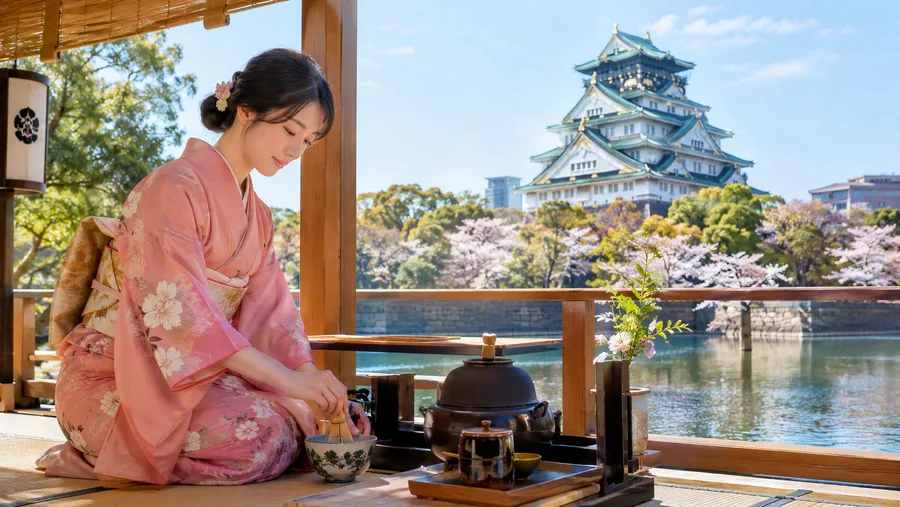
Making the Most of Your Tea Experience in Osaka Best Districts
Timing alters everything in Osaka. If you book an early morning slot out by Osaka Castle, say 10:00 AM, the morning light cuts through the pine trees and the air smells clean. You can walk through the fortress gates before the big tour buses pull up to the main museum entrance. Follow the tea ritual with a stroll along the outer moat, and your entire morning feels calm and deliberate.
Dotonbori works better in reverse. Spend your afternoon wandering the neon jungle, browsing knife shops in Doguyasuji kitchen arcade, and eating takoyaki until your tongue is burned. Then, when sensory overload hits around 4:30 PM, disappear into a tatami room. Coming back out onto the neon-drenched bridge after an hour of silence is surreal. The bright yellow Don Quijote ferris wheel feels twenty times louder than it did before.
For visitors hunting down the tea ceremony in osaka best suited to their travel style, think about who is traveling with you. Families with younger kids often do better in Dotonbori because the sessions are punchy and you are never more than three minutes from a crepe stand or a train station. Couples or solo travelers who love photography usually fall in love with the castle grounds, where long stone hallways and old cedar trees provide better backdrops.
Either way, avoid booking sessions back-to-back with train departures. You do not want to be checking your watch while someone is carefully folding silk napkins to prepare you a drink. Give yourself twenty minutes on either side of the appointment to simply breathe.
Frequently Asked Questions about tea ceremony dotonbori osaka
Do I have to sit on my knees the whole time?
No. Most modern studios offer low benches, folding stools, or let you sit cross-legged if kneeling hurts. Hosts care about your comfort far more than rigid posture.
Can I take photos during the ceremony?
Almost all venues allow photos, but ask first. Many hosts prefer you to put the camera down while they prepare the first bowl, then give you dedicated time to take pictures and hold the utensils afterward.
Is it better to book in Dotonbori or at Osaka Castle?
Choose Dotonbori if you want quick station access, flexible scheduling, and a cozy break from street food. Choose Osaka Castle if you want historical grounds, garden views, and traditional architecture.
Quick Reference
- Dotonbori: 3 to 7 min walk from Namba subway
- Osaka Castle: 15 to 20 min walk across park grounds
- Typical cost: 3,500 to 7,000 yen per person
- Session duration: 45 to 60 minutes on average
- Dress code: socks required for stepping onto tatami
Book your tea ceremony osaka experience:
My Take
People think you need to take an express train to Kyoto to understand Japanese tea, but that is simply not true. Osaka has been drinking and trading green tea since merchant barges sailed up the Yodogawa river centuries ago. Sitting on a straw mat while the neon signs of Dotonbori flicker through thin paper screens gives you an honest look at modern Japan, where old rituals survive by hiding right in plain sight. Pick the location that matches your walking pace, remember to take your shoes off at the door, and drink the matcha down to the very last bitter drop.
Read more about tea ceremony osaka.