Tea Ceremony in Osaka vs Kyoto vs Tokyo: Which to Choose
My feet went numb twenty minutes into my first tea session behind Kennin-ji. I sat there on the tatami, trying not to wince while an elderly woman turned a black Raku bowl with terrifying precision. Choosing a tea ceremony osaka or kyoto usually feels like the ultimate cultural dilemma for first-time visitors, but Tokyo throws another wrench into the planning. Each city treats powdered green tea with a completely different personality, from reverent temple silence to merchant warmth and modern rooftop minimalism.
The ritual itself dates back centuries, yet the vibe changes the minute you cross prefectural borders. Most travelers assume Kyoto owns the monopoly on authenticity. It does not. Osaka gives you deep roots tied directly to the grandfather of tea, Sen no Rikyu, without making you feel like an intruder in an ancient shrine. Tokyo, meanwhile, balances sleek luxury penthouses with neighborhood teahouses tucked away in Yanaka. If you have only one afternoon free, picking the right city comes down to your tolerance for formality, your budget, and how badly your knees complain on the floor.
Book your tea ceremony osaka experience:
Kyoto: Ancient Atmosphere and Quiet Reverence
Kyoto feels like stepping onto a movie set that takes itself very seriously. Most tea venues here hide behind weathered cedar lattices in Gion, Miyagawacho, or near Daitoku-ji, where tea masters have practiced the exact same wrist angles for four hundred years. You walk through mossy roji garden paths designed to strip away the worldly dust from your shoes before you crawl through a tiny sliding doorway. The air smells damp, like cedar bark, sweet charcoal, and crushed matcha leaves.
The silence can be heavy. In an authentic Kyoto chashitsu, small talk dies. You sit quietly, listening to the iron kettle bubble, a sound that tea books poetically compare to wind whistling through mountain pines. It is gorgeous. It is also genuinely intimidating if you have never handled a chasen whisk before. If you want the version of Japan that feels frozen in 1600, Kyoto delivers every single drop of that fantasy.
Expect strict adherence to the Urasenke or Omotesenke school rules. Your host will point the bowl motif away from you, you will turn it clockwise twice, sip, wipe the rim with your thumb and forefinger, and wipe your fingers on a piece of kaishi paper. Do not panic if you forget the steps. The masters are patient, though their silent gazes make you sit a little straighter. You will pay for the privilege, too, with standard group sessions starting around 4,500 yen and private temple bookings easily topping 15,000 yen.
Pro tip: Wear thick, plain white socks without holes; walking barefoot onto century-old tatami mats in Kyoto temples is considered offensive.
Osaka: The Grounded, Merchant Roots of the Ritual
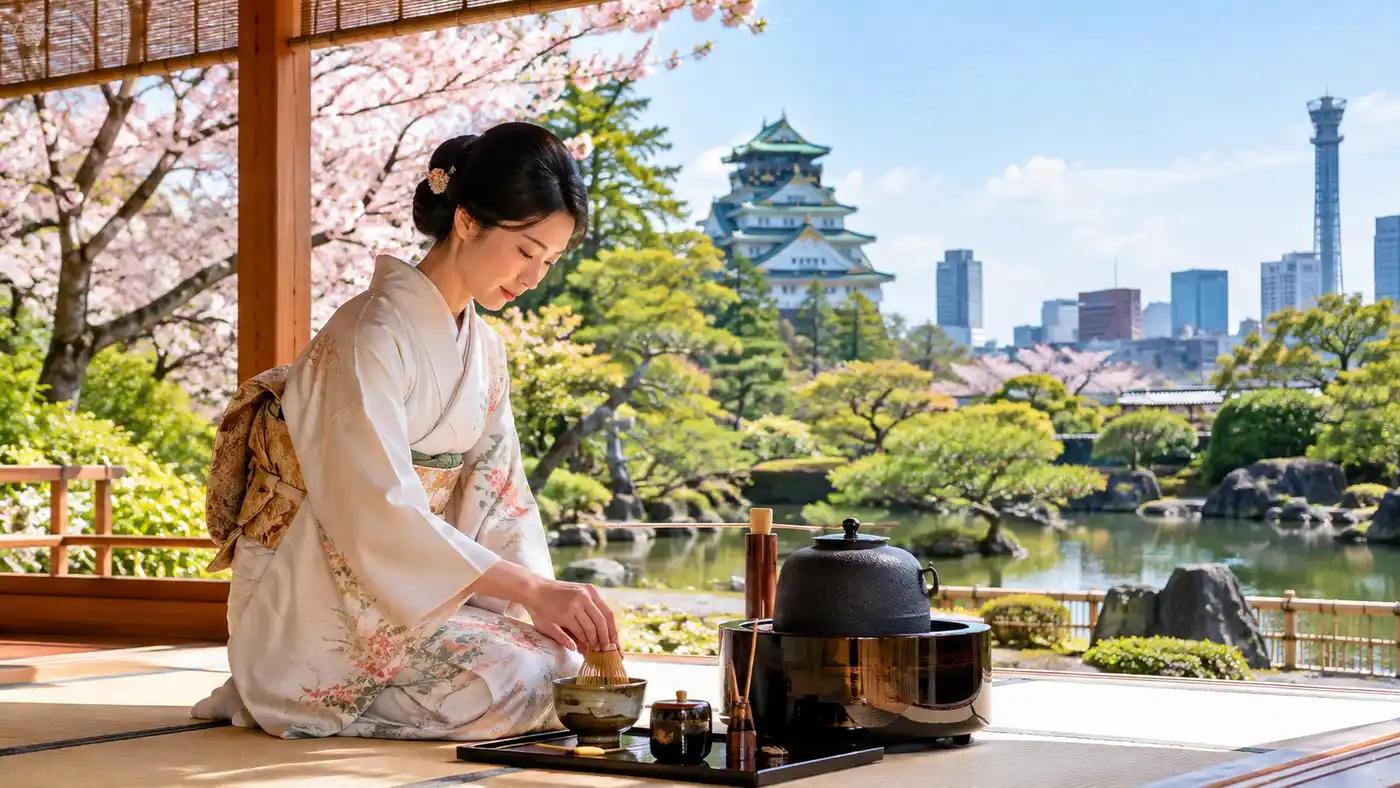
People forget that Sen no Rikyu, the merchant who codified the entire rustic wabi-cha style, grew up in Sakai, just south of central Osaka. While Kyoto made tea an elite courtly pursuit, Osaka built it around genuine hospitality, trade deals, and warm conversation. That spirit survives here. If you book a session around Namba or near the castle, your instructor will probably crack a joke within the first five minutes to help everyone relax their shoulders.
It feels personal. The masters in Osaka focus far less on rigid posture and much more on the core concept of ichigo ichie - the idea that this precise meeting will never happen again in your lifetime. Many travelers find this approach far more memorable than kneeling in stiff silence for an hour. If you want to dress up, finding a kimono tea ceremony in Osaka is simpler and often cheaper than in Kyoto, with shops welcoming beginners without any gatekeeping.
The city makes tea accessible for families, solo wanderers, and people who physically cannot sit seiza-style for forty minutes. You will find small wooden teahouses where you can sit on low wooden stools or benches. You still learn to whisk the foam, you still eat seasonal wagashi shaped like maple leaves or morning glories, but nobody scolds you for asking a dumb question about how the kettle stays hot.
Note: Some budget venues around Dotonbori lean heavily into novelty tourist entertainment, so look for studios run by certified instructors if you want traditional depth.
Tokyo: Contemporary Twists, Modern Spaces, and High Precision
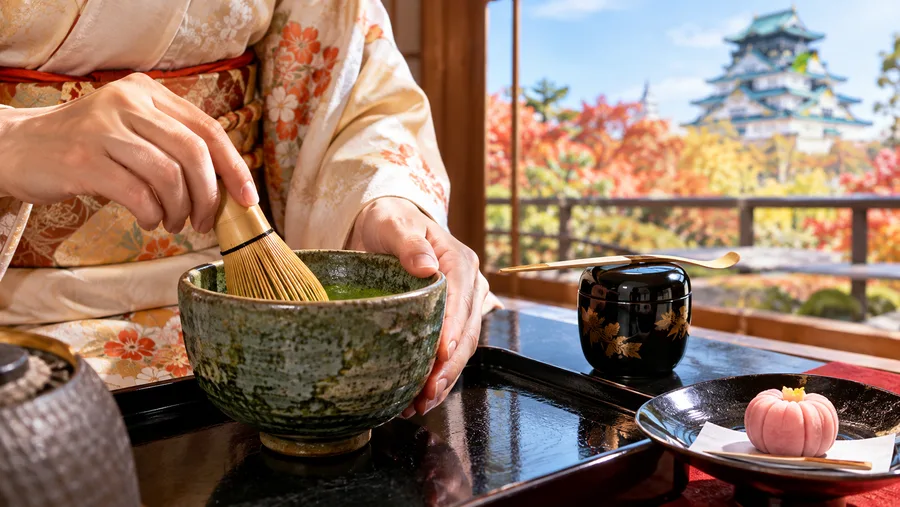
Deciding between a tea ceremony osaka or tokyo comes down to your personal aesthetic. Tokyo approaches tea through two extremes. On one side, you have sleek, hyper-curated spaces in Ginza, Roppongi, and Omotesando. These modern salons serve rare single-origin matcha whisked under subtle recessed spotlights, accompanied by wagashi crafted by patisserie chefs who trained in Paris. It feels like high art gallery minimalism.
On the other hand, Tokyo preserves historic garden teahouses inside public landscape parks like Hamarikyu and Koishikawa Korakuen. Sitting inside a pavilion jutting out over a tidal pond while high-rise office towers loom in the reflection behind you is a surreal experience. It grounds you in modern Japanese life, showing how the past coexists with sheer corporate momentum.
Efficiency rules here. Sessions in Tokyo start precisely on the minute. Booking systems are bilingual, polished, and run through frictionless smartphone apps. You can finish an intense 45-minute lesson, take your photos, and be on the Yamanote line to Shibuya three minutes later. It lacks the damp, moss-covered mysticism of rural Kansai, but it fits a tight urban itinerary effortlessly.
Book your tea ceremony osaka experience:
Comparing Tea Ceremonies: Tokyo vs Kyoto vs Osaka
Planning your travel days gets easier once you see the trade-offs clearly. Looking across tea ceremonies tokyo vs kyoto osaka, each city serves a distinct type of traveler.
| City | Average Cost | Atmosphere | Best For | Seating Style |
|---|---|---|---|---|
| Kyoto | 4,500 - 16,000 yen | Formal, quiet, spiritual | History purists and photographers | Traditional tatami (seiza floor kneeling) |
| Osaka | 3,200 - 8,500 yen | Warm, interactive, welcoming | First-timers and curious foodies | Tatami or low tables and benches |
| Tokyo | 4,000 - 14,000 yen | Sleek, artistic, efficient | Design lovers and tight schedules | Chairs, garden pavilions, or modern mats |
Cost varies based on whether you book a public shared experience or a private room. If you want a tailored session where the master speaks directly to your group, reserving a private tea ceremony in Osaka gives you intimacy for a fraction of what temple compounds charge up in Kyoto. Tokyo prices spread out wildly, depending entirely on whether you visit an old municipal park teahouse or a private designer salon on the seventh floor of a Ginza high-rise.
Time commitments matter as well. Kyoto sessions often require navigating winding residential lanes far from subway stops, eating into your morning. Osaka teahouses tend to nestle near major transit hubs like Tennoji or Umeda, making them convenient pit stops between street food runs.
Practical Factors: Atmosphere, Language, and Physical Comfort
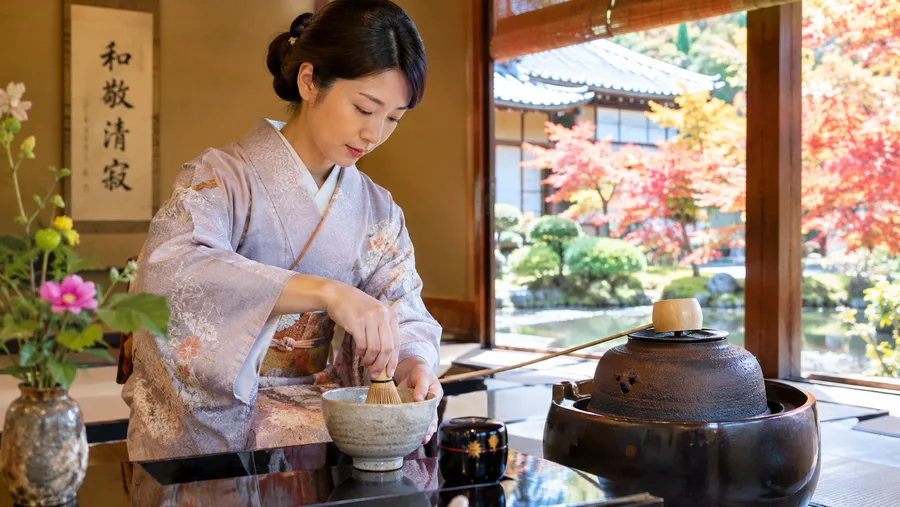
Do not underestimate how much your hips will ache. Kneeling on a tatami mat sounds romantic until minute twelve, when pins and needles shoot up both calves. If you have joint stiffness, back problems, or simply are not used to floor sitting, pick your venue carefully.
- Seating choices: Kyoto almost always demands pure floor sitting, though some venues offer small wooden folding stools called seiza chairs if you ask quietly before the ritual starts.
- Language barriers: Osaka hosts tend to use everyday English mixed with expressive gestures, whereas Kyoto relies on prepared bilingual scripts recited with formal precision.
- Photography etiquette: Tokyo studios usually permit discreet smartphone photos during the sweet-eating stage, while authentic Kyoto sub-temples strictly forbid cameras until the master cleans the utensils and leaves the room.
There is also the question of hands-on participation. Some traditional ceremonies only allow guests to observe the host prepare the tea, receive the bowl, drink, and bow. That is a performance, not a class. If your goal is holding the bamboo whisk yourself, ensure your reservation explicitly mentions hands-on preparation.
Wagashi sweets deserve a mention here too. The seasonal confection eaten before drinking cuts the bitter vegetal astringency of the matcha. Kyoto prides itself on subtle, bean-paste designs themed after specific poems or seasonal shifts. Osaka bakers often lean toward richer, slightly sweeter profiles, while Tokyo pushes experimental textures using yuzu, agar, and wild mountain herbs.
Frequently Asked Questions about tea ceremony osaka or kyoto
Is it better to do a tea ceremony in Osaka or Kyoto for beginners?
Osaka is generally better for absolute beginners because the hosts are warm, relaxed, and happy to chat. Kyoto can feel intimidating due to strict temple etiquette and quiet formality.
Can I wear western clothes to a tea ceremony in Tokyo or Kyoto?
Yes, neat casual clothing is totally fine everywhere. Just avoid short skirts, low-cut tops, and heavy jewelry that could scratch antique ceramic bowls, and always bring clean socks.
How long does a typical tea ceremony experience last?
Most tourist-friendly sessions take roughly 45 to 70 minutes from the initial greeting to whisking your own bowl. Full, classical multi-course tea gatherings can last over three hours.
Quick Reference
- Kyoto: Best for strict tradition, moss gardens, and historic architecture.
- Osaka: Best for hands-on whisking, affordable pricing, and relaxed hosts.
- Tokyo: Best for sleek design, park views, and fast city scheduling.
- Standard duration: 45 to 60 minutes for introductory experiences.
Book your tea ceremony osaka experience:
The Bottom Line
If you want the solemn, temple-bell atmosphere where you leave feeling like you stepped backward through three dynasties, buy a train ticket to Kyoto. But if you want to understand tea as a lived, friendly art without worrying whether your toes are pointed in the wrong direction, do it in Osaka. Take a quiet hour away from the busy train stations, whisk the bright green froth until your wrist gets tired, and drink it while it is hot.
Read more about tea ceremony osaka.